Tree Cabling and Bracing in Spartanburg South Carolina
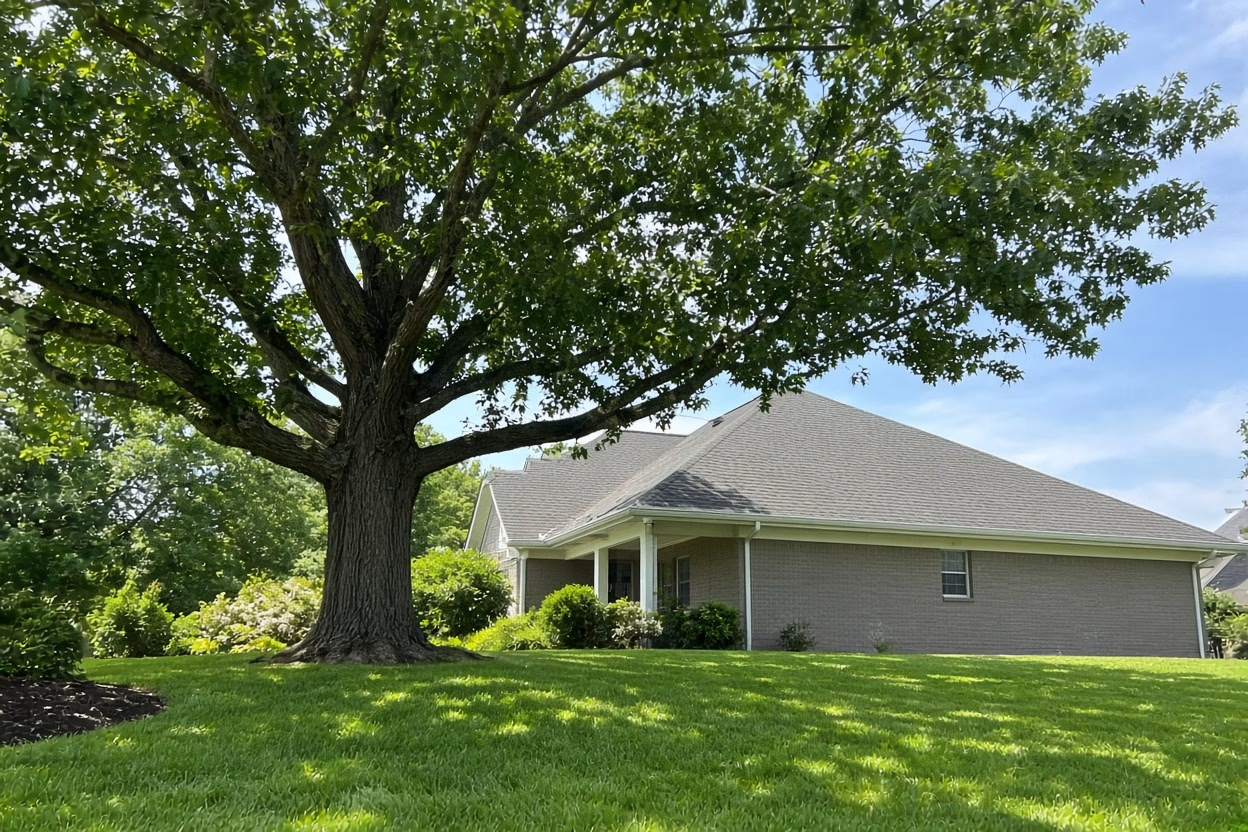
Tree cabling and bracing in Spartanburg South Carolina can help support trees with weak branch unions, split trunks, or structural concerns that may increase the risk of limb failure. Out On A Limb Tree Service provides professional tree care solutions to help property owners evaluate tree stability and determine whether supplemental support may be appropriate.
Trees can develop structural weaknesses as they grow, particularly when they have multiple trunks, heavy lateral branches, narrow branch connections, or damage from storms. These conditions do not always mean a tree must be removed. In some cases, properly planned cabling and bracing may help support vulnerable sections and preserve a tree that remains suitable for retention.
Every tree has different structural characteristics. Its species, age, size, growth pattern, existing damage, and surrounding environment all influence whether support systems are appropriate. A professional assessment helps determine the most suitable approach for the tree and the property.
Professional Tree Cabling and Bracing Services in Spartanburg South Carolina
Tree cabling and bracing are supplemental support techniques used to help manage certain structural weaknesses in trees. Although the terms are often used together, each method serves a different purpose.
Cabling typically involves installing specialized support cables between selected limbs or stems. These cables can help limit excessive movement and reduce the likelihood of failure under certain loading conditions. Bracing generally involves installing threaded rods or similar structural supports through weak unions or split sections when the tree’s condition and the proposed design justify their use.
Out On A Limb Tree Service can evaluate trees with structural concerns and help determine whether cabling, bracing, pruning, or another tree care solution may be suitable. The goal is to address the specific weakness without automatically removing a tree that may be capable of remaining in the landscape.
When Does a Tree Need Cabling or Bracing?
Not every tree with a large branch or multiple trunks requires additional support. However, certain conditions may justify a closer inspection.
-
Weak branch unions: Two major limbs or stems may have a narrow connection that warrants evaluation.
-
Multiple trunks: Trees with co-dominant stems may have structural concerns where the trunks join.
-
Heavy lateral limbs: Large branches extending far from the trunk may place additional stress on their attachment points.
-
Existing trunk splits: A crack or separation may require assessment to determine whether support is appropriate.
-
Storm-related structural damage: Strong winds can expose weaknesses or worsen existing cracks in branches and stems.
-
Valuable landscape trees: Property owners may want to explore support options for mature trees that contribute shade, appearance, or landscape value.
Cabling and bracing are not suitable for every damaged tree. Severe decay, extensive structural failure, or compromised root systems may make removal a more appropriate option.
Benefits of Tree Cabling and Bracing
Trees provide shade, improve the appearance of a property, and contribute to outdoor environments. When a tree develops a structural weakness, property owners may want to understand whether it can be retained rather than removed.
Professionally designed support systems may help manage specific structural concerns while allowing a suitable tree to continue growing. The benefits depend on the tree’s condition, the installation method, and ongoing maintenance.
Support for vulnerable limbs: Cabling may help limit excessive movement in selected branches and stems.
Potential tree preservation: When a tree is otherwise suitable for retention, supplemental support may be one option to consider before removal.
Management of certain structural weaknesses: Bracing may provide additional support for specific weak unions or split sections when professionally justified.
Protection of landscape value: Supporting a suitable mature tree may help preserve shade and the established appearance of the property.
A tailored tree care plan: Assessment helps identify whether support, selective pruning, monitoring, or removal is the best course of action.
Cabling and bracing do not make a tree failure-proof. They also do not correct every underlying problem. Proper installation and periodic inspection are important because trees continue to grow, change, and respond to environmental conditions.